Mosborough’s Open Fields – A Glimpse into Our Medieval Landscape

Long before today’s neat hedgerows and housing estates, Mosborough’s landscape was shaped by a very different system of farming — the open fields. The earliest permanent buildings were probably clustered around the site of Mosborough Hall, perched on the 127m contour line — the highest point locally — overlooking Mosborough Moor to the west. This commanding spot may even have been the site of the early English “fort of the moor”, from which Mosborough gets its name.

From here, the surrounding slopes were divided into great open fields, their layout still traceable in the shape of later enclosures and in the place-names recorded in manor court rolls and 18th-century maps. These fields weren’t hedged or fenced like modern ones. Instead, they were divided into long narrow strips, cultivated by different families under a shared, carefully regulated system. Each villager farmed scattered strips across different fields, sharing ploughing schedules, crop rotations and grazing rights.

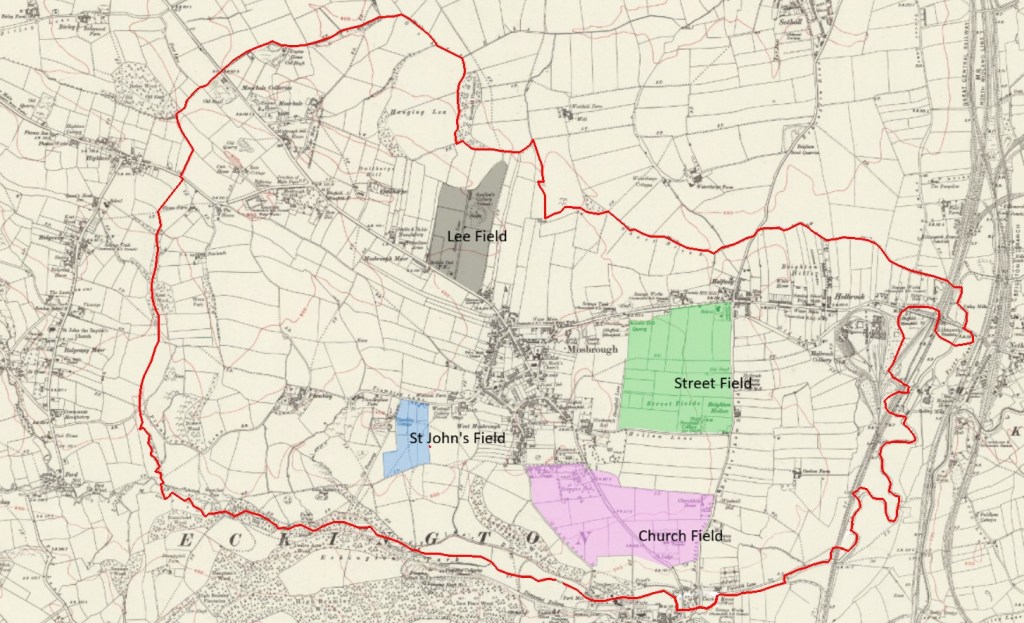
Three main fields surrounded Mosborough (see image attached):

Street Field lay west of Mosborough Hall, bounded by Station Road, Street Field Lane, Hollow Lane and Beighton Road. By 1795 it covered around 67 acres, divided between 18 occupiers. Parts of this land, including Swainhouse Field and Knowle Hill Field, had earlier been divided into smaller plots, hinting at centuries of cultivation. It has been suggested that the Streetfield name is associated with the Roman road, Rykneld Street.

Church Field stretched south towards St Peter and St Paul’s parish church. By the late 18th century, it was bisected by Sheffield Road and enclosed by Beighton and Park Mill (now Gashouse Lane) Roads, covering about 95 acres worked by 12 occupiers.

Street Field and Church Field were separated by a group of long strip-like fields running east to west, named Green Balk; “balk” in Middle English meaning an unploughed ridge of land separating fields. In a manorial survey dated 1480 Green Balk was occupied by Robert Rotherham of Mosborough.

Lee Field lay north of Mosborough Moor. In 1795, just two men – the Earl Fitzwilliam of Wentworth Woodhouse and Thomas Staniforth of Mosborough – held its 32 acres. Nearby “Harbour Friths” fields to the north, with their irregular shapes and woodland names, point to early assarts – clearings cut from the medieval woods.

Plumley had its own open field, St John’s Field, lying south of Plumley Lane and stretching down towards Lady Bank Wood. This 12-acre field was shared between four occupiers, and may correspond to “The Singels Field” mentioned in manor records of 1634.

Under the old open field system, each of these great fields would have been divided into strips and cultivated according to a communal crop rotation. One field might lie fallow while another grew winter wheat and a third spring barley or oats. After harvest, the fields were thrown open for common grazing, and livestock wandered over the stubble, manuring the land for the next year’s crop. It was a cooperative way of farming that tied the whole village together in a shared rhythm of work, decision-making, and landscape.

This ancient system survived here for centuries, gradually giving way to enclosure in the late 18th century, when hedges were planted, boundaries fixed, and strips consolidated into larger fields. But the names of Street Field, Church Field, Lee Field, and St John’s Field still echo the medieval past — reminders that beneath our roads and housing estates lies a landscape once ruled by communal plough and shared pasture.
Bridle Stile: Mosborough’s ‘High Road’ to London

It may not be easy to comprehend nowadays that the Bridle Stile was once part of the principal route from Sheffield to London. There was an alternative, through Coal Aston to Marsh Lane and thence to Eckington, but the gradients on that route were considered far more arduous.
The Bridle Stile route led from Little Sheffield (perhaps better known today as Highfields) through Heeley and Gleadless to Mosborough, Eckington, and beyond. Notes from the records of the Wortley family of Wharncliffe Lodge in Sheffield, between 1731-1756, describe one such journey ‘From the Lodge to Eckington 12 miles thus: To Jessop’s [Broom Hall] 6 miles, from Mr. Jessop’s to Little Sheffield 1, Hely [Heeley] 1, Gladeley [Gleadless] 1, Marsburgh [Mosborough] 2, Eckington 1’. The 2 miles from Gleadless to Mosborough would have included the Bridle Stile. The mode of transport would have been horseback; carriages were not widely adopted until much later.
The name Bridle Stile is derived from the Middle English ‘bridel’, meaning headgear of a horse, relating to the verb ‘bregdan’, which means to move quickly, and the Old English ‘stig’, meaning path (language in everyday use before 900 AD). The route along the Ridgeway probably follows an earlier way stretching back to the prehistoric period.
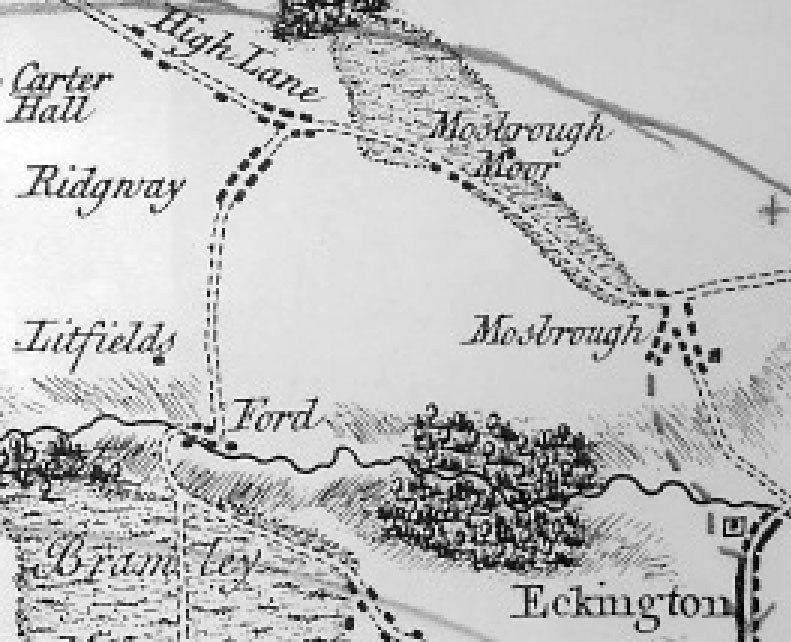
Burdett’s Map of Derbyshire (1791), one of the earliest complete maps of the county (see extract in Figure 1), depicts the route of the Bridle Stile from High Lane to Mosborough village, notably before the A6135 High Street/Mosborough Moor Turnpike Road was constructed. Records of the Eckington Manor Court in 1823 distinguish between the two routes, The Turnpike Road to the north and the ‘High Road’ (Bridle Stile) to the south.

Tony’s Fish and Chips, 23 Chapel Street, Mosborough

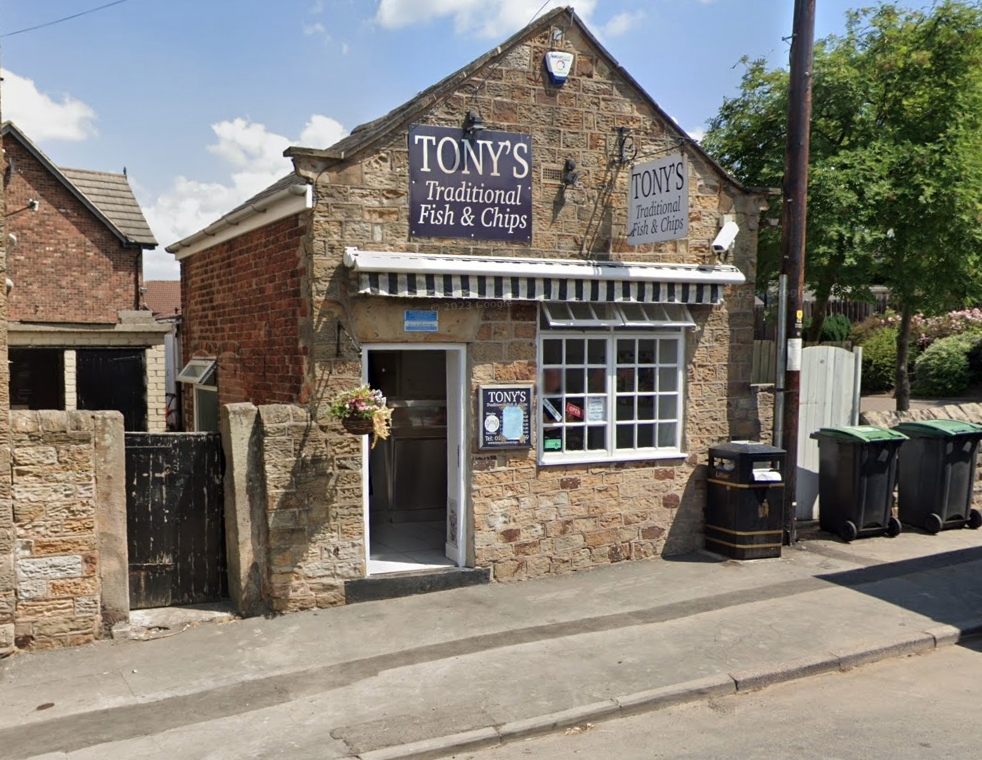
Fig. 1 – Tony’s Fish and Chips, 23 Chapel Street, Mosborough

Tony’s Fish and Chip Shop, located at 23 Chapel Street in Mosborough (Fig. 1), is recognized as one of the oldest chip shops in Sheffield. In January 2025, the establishment was placed on the market by its owners, Robert and Helena Hatt. Robert commenced his employment at the shop 45 years prior, having been hired by his brother-in-law, Tony Buxton, after whom the shop is named. He acquired ownership of the shop in September 2002.

The building itself exhibits significant historical characteristics, as evidenced by the stone coping and kneelers situated over the gable wall. It likely served originally as a small barn, stable, or coach house for the adjacent property at 21 Chapel Street, with origins that probably trace back to the early nineteenth century.

The shop was first referenced in a newspaper article in February 1913, in which a local figure named Fab Ashley was reported to have been found intoxicated at Frank Thorley’s fish and chip shop. Francis “Frank” Thorley (1846-1932), a native of Trowell in Nottinghamshire, relocated to Mosborough in 1879 with his wife, Elizabeth, and their four children. At that time, he worked as a night deputy at Messrs J. & G. Wells Holbrook Colliery while also managing a small grocery store on Back Street in Mosborough. It appears that he assumed the tenancy of 23 Chapel Street after it had been occupied by Fred Drabble, a building contractor, who had held it along with 24 Chapel Street—the opposite house—since 1901. The Census of 1911 identified Frank as a fish dealer operating at 23 Chapel Street.

After the death of his wife, Elizabeth, in 1915, Frank transferred the business to his daughter and son-in-law, Elizabeth and Arthur Smith, before moving to Cossall in Nottinghamshire. The Smiths maintained operations at 23 Chapel Street until Arthur died in 1936.

Identifying subsequent owners of the establishment has proven challenging until the 1960s, when it was occupied by Ada Buxton, the mother of Tony Buxton, who is fondly remembered by local residents.