Mosborough’s Open Fields – A Glimpse into Our Medieval Landscape

Long before today’s neat hedgerows and housing estates, Mosborough’s landscape was shaped by a very different system of farming — the open fields. The earliest permanent buildings were probably clustered around the site of Mosborough Hall, perched on the 127m contour line — the highest point locally — overlooking Mosborough Moor to the west. This commanding spot may even have been the site of the early English “fort of the moor”, from which Mosborough gets its name.

From here, the surrounding slopes were divided into great open fields, their layout still traceable in the shape of later enclosures and in the place-names recorded in manor court rolls and 18th-century maps. These fields weren’t hedged or fenced like modern ones. Instead, they were divided into long narrow strips, cultivated by different families under a shared, carefully regulated system. Each villager farmed scattered strips across different fields, sharing ploughing schedules, crop rotations and grazing rights.

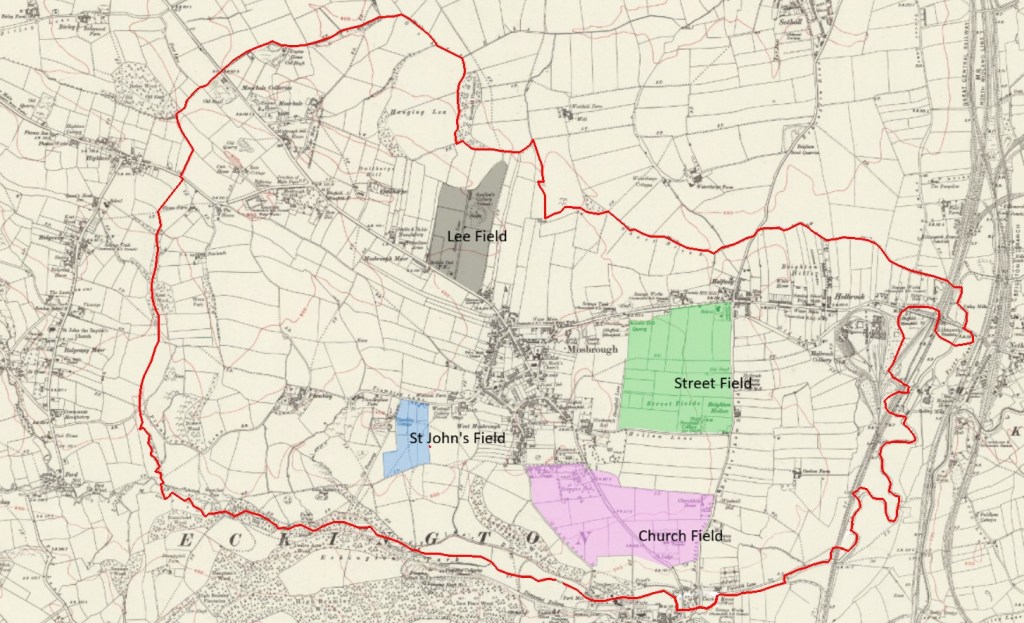
Three main fields surrounded Mosborough (see image attached):

Street Field lay west of Mosborough Hall, bounded by Station Road, Street Field Lane, Hollow Lane and Beighton Road. By 1795 it covered around 67 acres, divided between 18 occupiers. Parts of this land, including Swainhouse Field and Knowle Hill Field, had earlier been divided into smaller plots, hinting at centuries of cultivation. It has been suggested that the Streetfield name is associated with the Roman road, Rykneld Street.

Church Field stretched south towards St Peter and St Paul’s parish church. By the late 18th century, it was bisected by Sheffield Road and enclosed by Beighton and Park Mill (now Gashouse Lane) Roads, covering about 95 acres worked by 12 occupiers.

Street Field and Church Field were separated by a group of long strip-like fields running east to west, named Green Balk; “balk” in Middle English meaning an unploughed ridge of land separating fields. In a manorial survey dated 1480 Green Balk was occupied by Robert Rotherham of Mosborough.

Lee Field lay north of Mosborough Moor. In 1795, just two men – the Earl Fitzwilliam of Wentworth Woodhouse and Thomas Staniforth of Mosborough – held its 32 acres. Nearby “Harbour Friths” fields to the north, with their irregular shapes and woodland names, point to early assarts – clearings cut from the medieval woods.

Plumley had its own open field, St John’s Field, lying south of Plumley Lane and stretching down towards Lady Bank Wood. This 12-acre field was shared between four occupiers, and may correspond to “The Singels Field” mentioned in manor records of 1634.

Under the old open field system, each of these great fields would have been divided into strips and cultivated according to a communal crop rotation. One field might lie fallow while another grew winter wheat and a third spring barley or oats. After harvest, the fields were thrown open for common grazing, and livestock wandered over the stubble, manuring the land for the next year’s crop. It was a cooperative way of farming that tied the whole village together in a shared rhythm of work, decision-making, and landscape.

This ancient system survived here for centuries, gradually giving way to enclosure in the late 18th century, when hedges were planted, boundaries fixed, and strips consolidated into larger fields. But the names of Street Field, Church Field, Lee Field, and St John’s Field still echo the medieval past — reminders that beneath our roads and housing estates lies a landscape once ruled by communal plough and shared pasture.
“The Malthouse”, Station Road, Mosborough

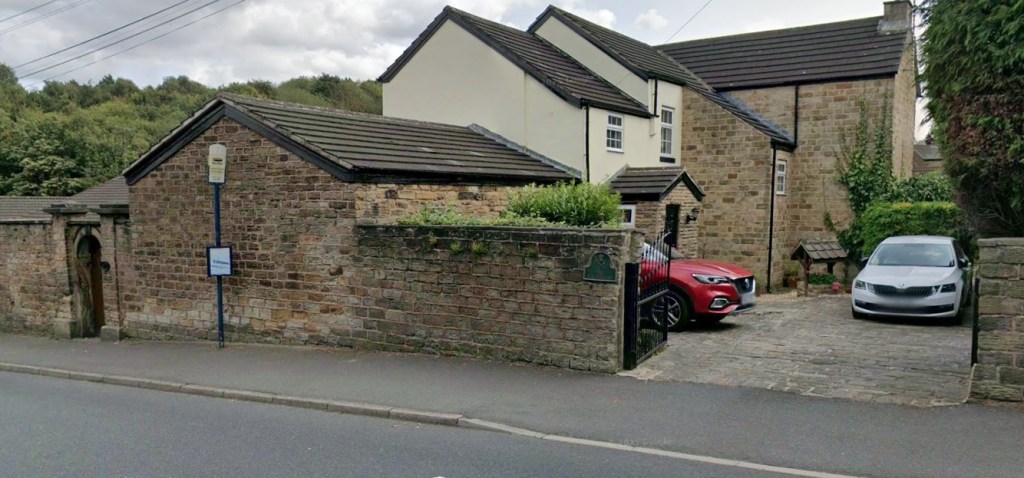
The story of the Malthouse on Station Road begins in 1818, on land that had only recently been transformed. For centuries, Mosborough Green had been open ground, where villagers grazed their animals in the old communal way. But the Enclosure Act of 1796 changed all that, carving the Green into private plots. One of these, a modest parcel beside Station Road, was allotted to Thomas Lindley. On it, new buildings soon rose—the beginnings of the Malthouse.

By 1826 the property had taken shape: a house with its garden, a stable and cowhouse, and, most importantly, the maltings that gave the site its name. Its first known occupant was Jonathan Oates, a maltster born in 1762, whose trade was essential to brewing and village life. Just a year later, however, Jonathan decided to sell up, advertising the property in the Sheffield Independent as “newly built within the last nine years.” His name then fades from local records. George Foster, writing years later, recalled that Oates had emigrated to America, and indeed his widow Hannah died in Marietta, Ohio in 1867. Jonathan himself disappeared into the wide unknown of the New World.

Ownership next passed to Harvey Slagg, eldest son of William Slagg of Mosborough Hall. Harvey had married well—Eliza Lowe of Unstone in 1829—but life was not kind to him. Eliza died young in 1836, and before long Harvey’s finances crumbled. He tried to sell the malthouse, kiln and dwelling in 1847, but within two years he was bankrupt.

The timing was unfortunate. Across England, the malting trade was in decline, caught between changing tastes, new technologies, and tightening regulations. By 1853, when the property went under the hammer again, it was in the hands of a Mrs Billam—likely the widow of Samuel Billam, a maltster and innkeeper at the Fox and Hounds in Marsh Lane. Samuel had briefly operated the Malthouse before his death in 1852, leaving his widow to manage what she could.

Soon afterwards the property passed into the hands of William Lowe, who took it on after his father’s bankruptcy. He let it to William Turner, a prosperous sickle and reaping-hook maker who also farmed thirty acres. Turner, however, had little use for the old maltings, which lay idle and unoccupied for years. By the time he retired in 1875, the industry that had once justified their construction had vanished altogether.

That same year the Ordnance Survey shows the inevitable: the kiln and malthouse were pulled down, and a neat row of cottages rose in their place. They became known as Malthouse Row. The original house and outbuildings survived, though, and by 1881 they were home to Charles Poole, a farmer and carrier who ran a regular service between Mosborough and Sheffield’s Pheasant Inn. His life at the Malthouse was long and steady; he raised his family there and, poignantly, it was from there that he petitioned the Burial Board in 1877 to allow his infant son William to be the first interment in Eckington’s new cemetery.

Charles Poole lived on in the old house until 1923, dying at the remarkable age of 88. He was buried in the same grave as his child, closing a chapter in the life of a building that had witnessed the rise and fall of Mosborough’s malting trade, and then found quieter purpose as a family home.

With thanks to the current owner of the property for assistance and for permission to publish this short summary.

The Former Primitive Methodist Chapel, Queen Street, Mosborough

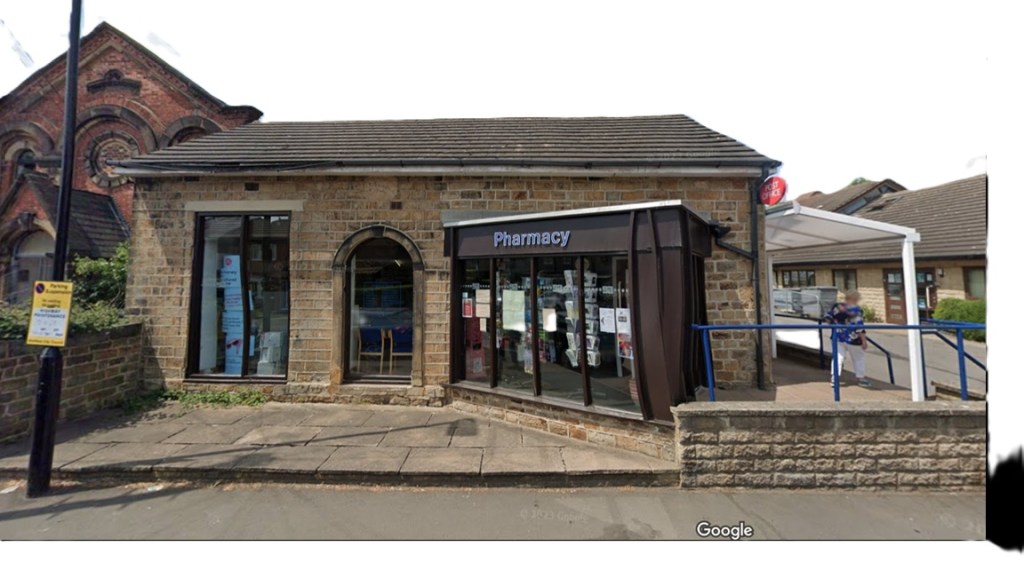
The former Primitive Methodist Chapel at 36/38 Queen Street, Mosborough, was built in 1830 by the local community on land purchased for £19 10s from Job Allen (1772-1853), publican and maltster of the White Hart Inn, Eckington. Allen had acquired the land from the Crown Estate in 1828 when the Manor of Eckington was released for sale upon the open market.

The Primitive Methodist movement was founded in 1811 by Hugh Bourne and William Clowes in Staffordshire. They emphasized evangelism, outreach to the working class, and open-air preaching and quickly gained popularity among rural and industrial communities, such as Mosborough. The chapel was built before any of the present chapels in the Sheffield Circuit with the aid of a mortgage of £100 from Sheffield solicitor and land surveyor John Haywood of 19 Paradise Square, Sheffield.

The modest, stone-faced building is simple and functional, distinguished by the keystone arch over the entrance, which reflects the movement’s emphasis on humility and accessibility. The accommodation rapidly became too small for its congregation and school, leading to efforts to raise funds for expansion. With the help of Sheffield cutlers, Messrs. Gilbert and Jones, the local community raised funds in 1868 to pay off the outstanding debt of £70 preparatory to building a new chapel alongside the existing one. Shortly afterwards, the Old Chapel was converted for use as two cottages.

Presently occupied by the community pharmacy of Gilbert and Armstrong, with a Post Office attached, several former tenants have been recorded at various times.

  • Farewell Woodhead (1877-1948) was a boot and shoe repairer. He was first recorded at 36 Queen Street in the 1912 Edition of Kelly’s Directory of the West Riding of Yorkshire and continued to occupy the premises until his retirement around 1942.
  • At this time (1941), the neighbouring property at No. 38 was tenanted by the British Legion (Mosborough) Branch.
  • Kelly’s Directory of 1924 records that No. 38 Queen Street was occupied by Charles Gee (1872-19480), a former miner who became incapacitated, operating a hardware store.
  • Thomas Henry Bolsover (1872-1949) ran a Fruit and Greengrocery store at No. 38 Queen Street around 1919.
  • The premises are also said to have been occupied by the Eckington Leader, a local newspaper publisher and by the Eckington Co-operative Society.

Following a period of disuse, the building was taken over by building contractors Sloane and Roebuck, who used it as offices with a builders’ yard to the rear. Eventually, the pharmacists Gilbert and Armstrong had it refurbished in 1996 in advance of the transfer of their business from Mosborough High Street.

Mark Kirkby (1852-1918) of Plumley Cottage, Mosborough

No photo description available.

A classic story of Mark Kirkby (1852-1918), told by Osbert Sitwell in his autobiography “Left Hand, Right Hand”.
“A character himself, he possessed an understanding of character in others which rendered him a doubly diverting companion. He would regale us, for instance, with stories of Mallender, who came from Mosborough, about a mile from where Mark lived, and was of so irascible a nature that on one occasion, when rain was pouring down and the weather-glass still marked fair, he seized the instrument and, taking it out of the house, shook it vigorously, and at the same time addressed it angrily with the words, “ Now see for thysen if it in’t raining ! ”

Joseph Creswick of Mosborough: A Soldier of the English Civil War

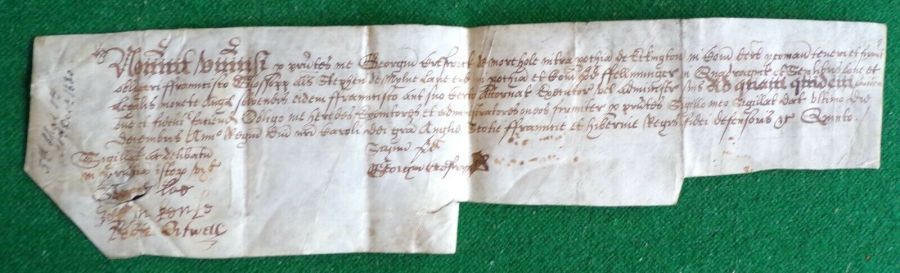
The appearance of this deed (c.1630) on EBay1 prompted the discovery of a Mosborough soldier of the English Civil War. George Creswick of Moorhole, mentioned in the document had a brother or son, Joseph (d. 1656), whose will was found at the National Archives. Joseph described himself as a yeoman of Mosborough, and being “sicke in Bodie”, he nominated his brother, Nathanial Creswick, to be his executor and to whom he left his horse, together with his doublet and breeches “which I have at London”. He directed that “all that monie which is due unto me from the Troope to be paid to the hands of my Quartermaster Henry Lichfield for the discharge of my burial and other incident charges attending”. He died during Oliver Cromwell’s Protectorate (1653-1658) and its not entirely clear whether he was a soldier of the Parliamentary or Royalist forces.

  1. Receipt in £23 10s from George Creswick of the Morehole, Eckington, yeoman to Francis Stephen alias Glossopp of Mylne Lane End, fellmonger, for a cottage in Mosborough and 1 1/2 acres on Levonstorth Furlong in Lee Felde bought by Glossopp by indenture of 31 December 1629. – 25 March 1630. S.R.O., D7987. ↩︎