The Remarkable Family History of William Stratford of Mosborough, Silver Plater (1787-1859)

William Stratford was born on 24 March 1787 on Spring Street in Sheffield, the son of Thomas Berry Stratford, a scissor maker, and his wife Susannah (née Kelsey). At thirteen he began an apprenticeship with Smith, Knowles, Creswick and Co., plate workers based on Arundel Street. He first trained as a silver candlestick hand before becoming a spinner, a specialist in shaping metal on a lathe—a technique central to the production of both plated and solid silver wares. By 1833 he appeared in local trade directories as a silver plater working in Bramall Lane, long recognised as a hub for workshops producing domestic and ceremonial silver plate.

In 1812 William married Mary Grey at Rotherham Minster. She was the daughter of William Grey, a pen and pocket knife maker of Lambert Street, Sheffield. The couple made their home in the Spring Street and Bramall Lane area and raised eight children between 1816 and 1832. Mary died on 22 October 1834, aged forty‑one.

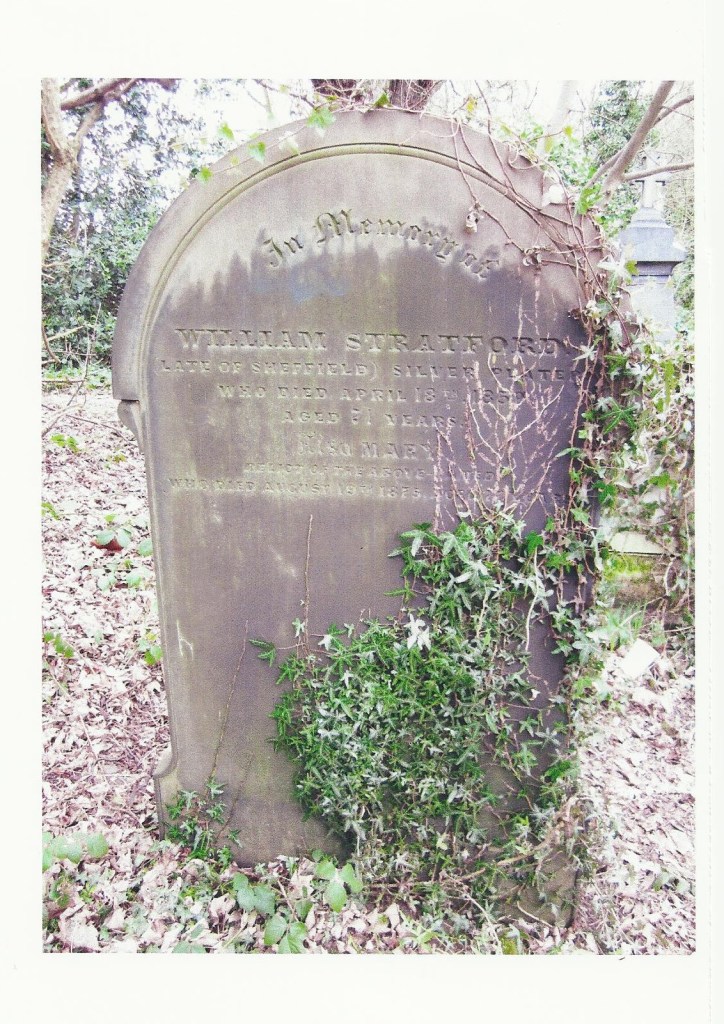
After a productive working life, William retired at the age of seventy‑one to Kelgate House in Mosborough. Although no direct connection to Mosborough is known, his move echoed a common pattern among successful craftsmen who, having prospered in Sheffield’s industrial districts, later sought the quieter surroundings of its semi‑rural outskirts. He died at Mosborough and was buried at St Peter and St Paul churchyard, Eckington, on 23rd April 1859 (memorial image attached).

According to Robert E. Leader’s Reminiscences of Old Sheffield: Its Streets and Its People (1875), William also possessed an unusually distinguished lineage. Leader recorded him as the nineteenth in descent from John Stratford, who served in the Parliament of Edward III in 1320. Through a later marriage within the family—specifically that of John Stratford, who died in 1533—he was also linked to the line of William de Traci, one of the four knights implicated in the murder of Thomas à Becket. This ancestry connected William not only to the Dukes of Normandy but also to the early Saxon kings of England, as de Traci himself was descended from Ethelred the Unready and Queen Emma, daughter of the third Duke of Normandy.
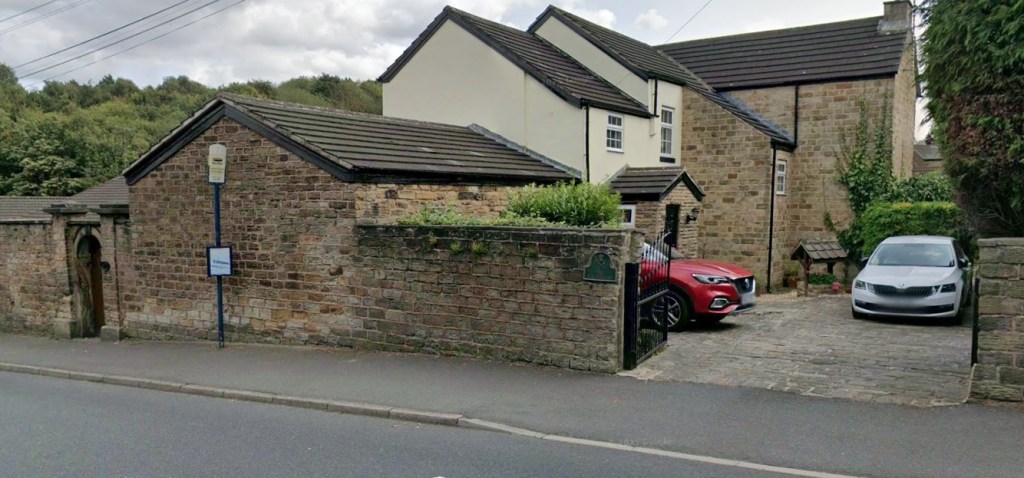
“The Malthouse”, Station Road, Mosborough

The story of the Malthouse on Station Road begins in 1818, on land that had only recently been transformed. For centuries, Mosborough Green had been open ground, where villagers grazed their animals in the old communal way. But the Enclosure Act of 1796 changed all that, carving the Green into private plots. One of these, a modest parcel beside Station Road, was allotted to Thomas Lindley. On it, new buildings soon rose—the beginnings of the Malthouse.

By 1826 the property had taken shape: a house with its garden, a stable and cowhouse, and, most importantly, the maltings that gave the site its name. Its first known occupant was Jonathan Oates, a maltster born in 1762, whose trade was essential to brewing and village life. Just a year later, however, Jonathan decided to sell up, advertising the property in the Sheffield Independent as “newly built within the last nine years.” His name then fades from local records. George Foster, writing years later, recalled that Oates had emigrated to America, and indeed his widow Hannah died in Marietta, Ohio in 1867. Jonathan himself disappeared into the wide unknown of the New World.

Ownership next passed to Harvey Slagg, eldest son of William Slagg of Mosborough Hall. Harvey had married well—Eliza Lowe of Unstone in 1829—but life was not kind to him. Eliza died young in 1836, and before long Harvey’s finances crumbled. He tried to sell the malthouse, kiln and dwelling in 1847, but within two years he was bankrupt.

The timing was unfortunate. Across England, the malting trade was in decline, caught between changing tastes, new technologies, and tightening regulations. By 1853, when the property went under the hammer again, it was in the hands of a Mrs Billam—likely the widow of Samuel Billam, a maltster and innkeeper at the Fox and Hounds in Marsh Lane. Samuel had briefly operated the Malthouse before his death in 1852, leaving his widow to manage what she could.

Soon afterwards the property passed into the hands of William Lowe, who took it on after his father’s bankruptcy. He let it to William Turner, a prosperous sickle and reaping-hook maker who also farmed thirty acres. Turner, however, had little use for the old maltings, which lay idle and unoccupied for years. By the time he retired in 1875, the industry that had once justified their construction had vanished altogether.

That same year the Ordnance Survey shows the inevitable: the kiln and malthouse were pulled down, and a neat row of cottages rose in their place. They became known as Malthouse Row. The original house and outbuildings survived, though, and by 1881 they were home to Charles Poole, a farmer and carrier who ran a regular service between Mosborough and Sheffield’s Pheasant Inn. His life at the Malthouse was long and steady; he raised his family there and, poignantly, it was from there that he petitioned the Burial Board in 1877 to allow his infant son William to be the first interment in Eckington’s new cemetery.

Charles Poole lived on in the old house until 1923, dying at the remarkable age of 88. He was buried in the same grave as his child, closing a chapter in the life of a building that had witnessed the rise and fall of Mosborough’s malting trade, and then found quieter purpose as a family home.

With thanks to the current owner of the property for assistance and for permission to publish this short summary.

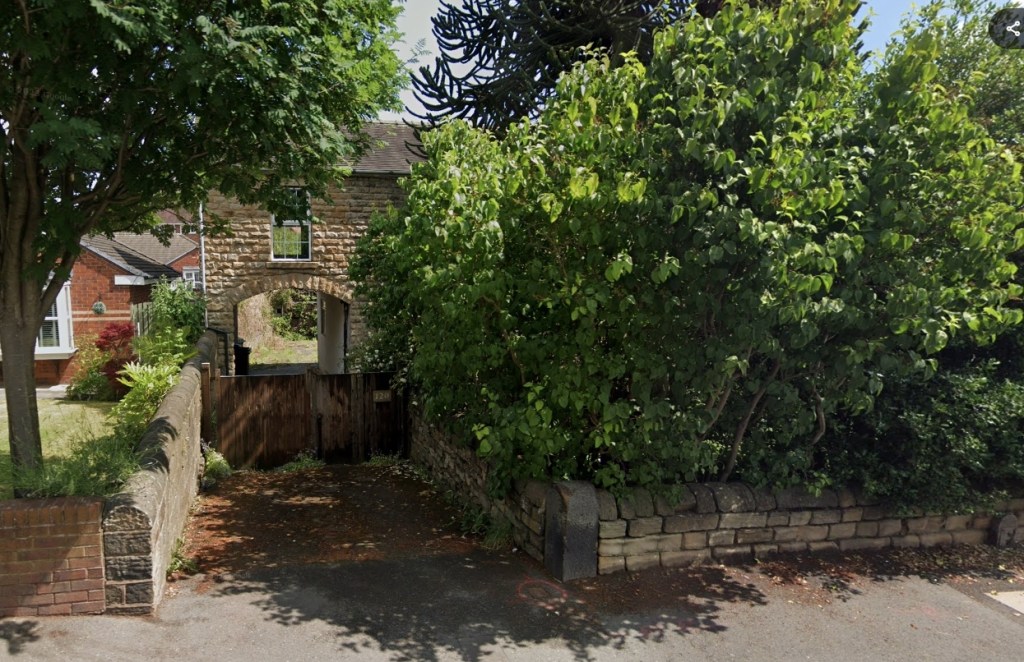
‘Ivy House’, 120 High Street, Mosborough

Fig. 1 – Ivy House, 120 High Street, Mosborough.

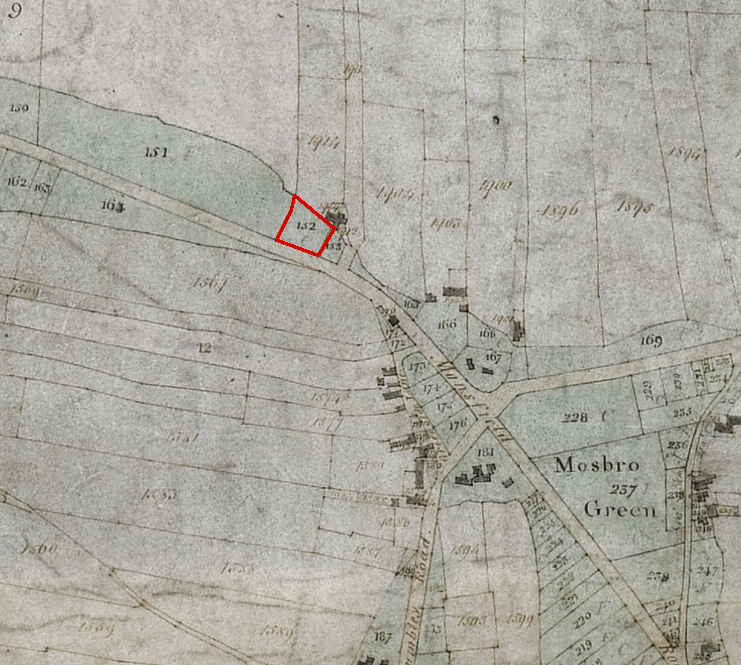
The land upon which 120 High Street is built was formerly part of the common land known as Mosborough Moor. In 1796, Enclosure Commissioners divided the common into allotments that were granted to those with landholdings within the Manor. Allotment No. 152, (edged red on the attached extract from the Enclosure plan) upon which 120 High Street was built was granted to John Pedley (1740-1809) of Plumley Hall, Mosborough. There were no buildings on this allotment in 1796, and George Sanderson’s map “Twenty Miles around Mansfield”, indicates that the land was still clear of buildings in 1835. The 1875 Ordnance Survey map of Mosborough shows the house and garden with a layout very similar to how it looks today. A report of an auction sale in 1890 reveals that John Ibbotson Hayes (1801-1890), the former Schoolmaster of Mosborough School, had been the owner of six properties in High Street, one of which, No. 120, was occupied by a family by the name of Waller. The 1891 Census confirms that this was Thomas Waller, a coal carter, with his wife Annis and sons George and Elijah. Hayes had occupied the neighbouring house and yard (“Hayes Yard”, since demolished). All six of the houses were purchased by Henry Watson, a butcher of Renishaw. Thomas Waller died at 120 High Street in 1900, and it appears that his wife and one of their sons were living there at the time of the 1901 Census. By the Census of 1911, the Hewitt family were in residence and 120 High Street had been newly named as “Ivy House”, comprising of 6 rooms. Kitson Hewitt, 34, a colliery engineer and his wife Mary Hannah had been joined by two young lodgers, Gwendoline Amy Green (27) and Gertrude Amy Greenwood (23), female teachers. Hewitt was Honorary Secretary of the Mosborough Working Men’s Club, treasurer and sidesman at St. Mark’s parish church and a member of the Conservative and Unionist Party, having unsuccessfully contested elections to the Eckington Parish Council. Hugh Rowbotham, farmer, and his family of six children moved into 120 High Street some time before 1921. He died there in 1936.

Fig. 2 – Extract from 1796 Enclosure Award Map