Mosborough’s Open Fields – A Glimpse into Our Medieval Landscape

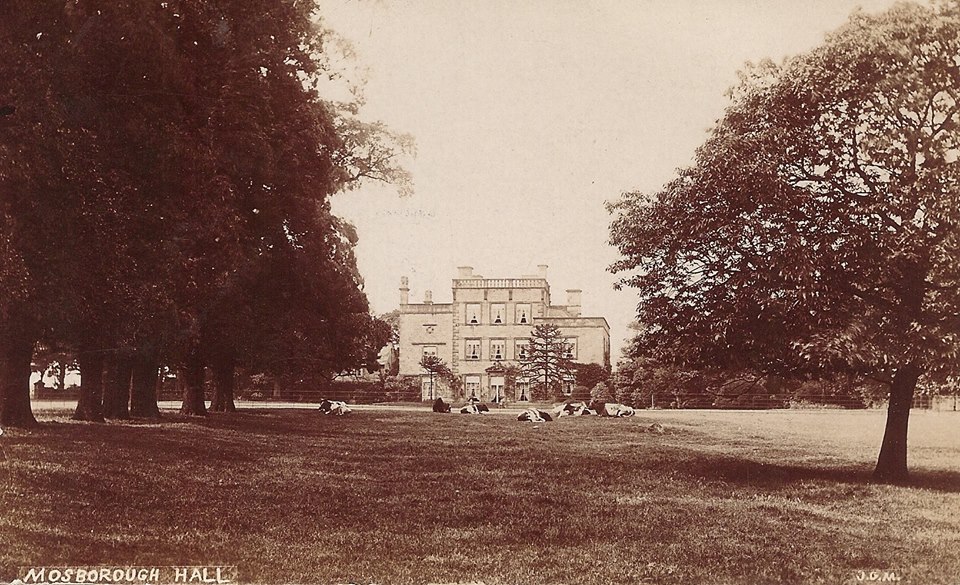
Long before today’s neat hedgerows and housing estates, Mosborough’s landscape was shaped by a very different system of farming — the open fields. The earliest permanent buildings were probably clustered around the site of Mosborough Hall, perched on the 127m contour line — the highest point locally — overlooking Mosborough Moor to the west. This commanding spot may even have been the site of the early English “fort of the moor”, from which Mosborough gets its name.

From here, the surrounding slopes were divided into great open fields, their layout still traceable in the shape of later enclosures and in the place-names recorded in manor court rolls and 18th-century maps. These fields weren’t hedged or fenced like modern ones. Instead, they were divided into long narrow strips, cultivated by different families under a shared, carefully regulated system. Each villager farmed scattered strips across different fields, sharing ploughing schedules, crop rotations and grazing rights.

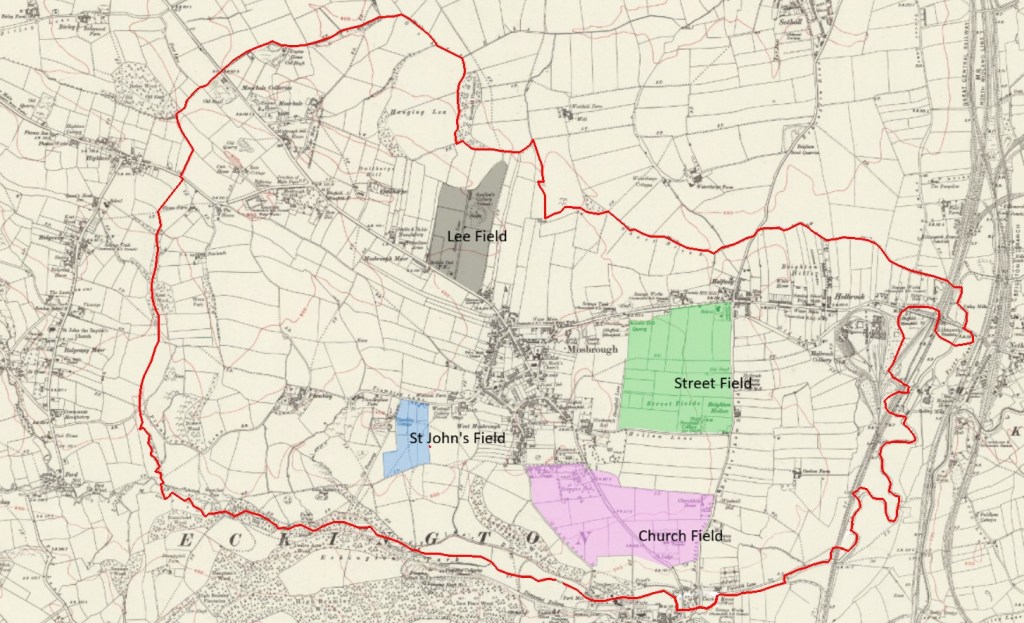
Three main fields surrounded Mosborough (see image attached):

Street Field lay west of Mosborough Hall, bounded by Station Road, Street Field Lane, Hollow Lane and Beighton Road. By 1795 it covered around 67 acres, divided between 18 occupiers. Parts of this land, including Swainhouse Field and Knowle Hill Field, had earlier been divided into smaller plots, hinting at centuries of cultivation. It has been suggested that the Streetfield name is associated with the Roman road, Rykneld Street.

Church Field stretched south towards St Peter and St Paul’s parish church. By the late 18th century, it was bisected by Sheffield Road and enclosed by Beighton and Park Mill (now Gashouse Lane) Roads, covering about 95 acres worked by 12 occupiers.

Street Field and Church Field were separated by a group of long strip-like fields running east to west, named Green Balk; “balk” in Middle English meaning an unploughed ridge of land separating fields. In a manorial survey dated 1480 Green Balk was occupied by Robert Rotherham of Mosborough.

Lee Field lay north of Mosborough Moor. In 1795, just two men – the Earl Fitzwilliam of Wentworth Woodhouse and Thomas Staniforth of Mosborough – held its 32 acres. Nearby “Harbour Friths” fields to the north, with their irregular shapes and woodland names, point to early assarts – clearings cut from the medieval woods.

Plumley had its own open field, St John’s Field, lying south of Plumley Lane and stretching down towards Lady Bank Wood. This 12-acre field was shared between four occupiers, and may correspond to “The Singels Field” mentioned in manor records of 1634.

Under the old open field system, each of these great fields would have been divided into strips and cultivated according to a communal crop rotation. One field might lie fallow while another grew winter wheat and a third spring barley or oats. After harvest, the fields were thrown open for common grazing, and livestock wandered over the stubble, manuring the land for the next year’s crop. It was a cooperative way of farming that tied the whole village together in a shared rhythm of work, decision-making, and landscape.

This ancient system survived here for centuries, gradually giving way to enclosure in the late 18th century, when hedges were planted, boundaries fixed, and strips consolidated into larger fields. But the names of Street Field, Church Field, Lee Field, and St John’s Field still echo the medieval past — reminders that beneath our roads and housing estates lies a landscape once ruled by communal plough and shared pasture.

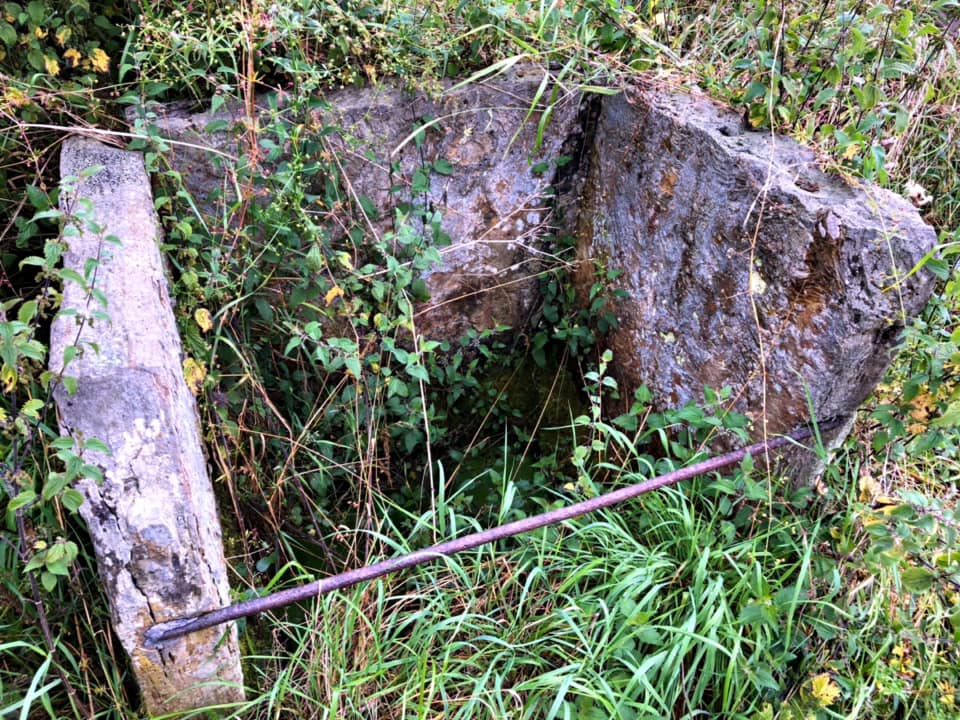
The “Priest’s Well”, Mosborough

While not strictly in Mosborough since 1967, the Priest’s Well at Eckington has been added to our Character Buildings and Structures List as it falls within the boundaries of the ancient Manor of Mosborough, making it relevant to the heritage of our community. Dating back to the building of the Parish Church around 1100 AD, the well was used by the parish priest to draw water and continued in use by travellers until the 1930s. (With thanks to Ground and Air Media of Eckington for permission to reproduce the photograph).

“The Malthouse”, Station Road, Mosborough

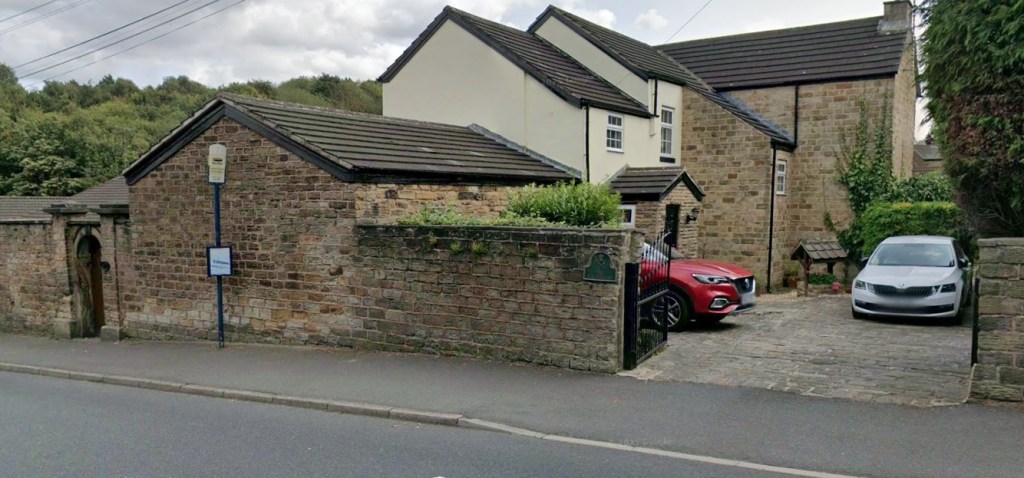
The story of the Malthouse on Station Road begins in 1818, on land that had only recently been transformed. For centuries, Mosborough Green had been open ground, where villagers grazed their animals in the old communal way. But the Enclosure Act of 1796 changed all that, carving the Green into private plots. One of these, a modest parcel beside Station Road, was allotted to Thomas Lindley. On it, new buildings soon rose—the beginnings of the Malthouse.

By 1826 the property had taken shape: a house with its garden, a stable and cowhouse, and, most importantly, the maltings that gave the site its name. Its first known occupant was Jonathan Oates, a maltster born in 1762, whose trade was essential to brewing and village life. Just a year later, however, Jonathan decided to sell up, advertising the property in the Sheffield Independent as “newly built within the last nine years.” His name then fades from local records. George Foster, writing years later, recalled that Oates had emigrated to America, and indeed his widow Hannah died in Marietta, Ohio in 1867. Jonathan himself disappeared into the wide unknown of the New World.

Ownership next passed to Harvey Slagg, eldest son of William Slagg of Mosborough Hall. Harvey had married well—Eliza Lowe of Unstone in 1829—but life was not kind to him. Eliza died young in 1836, and before long Harvey’s finances crumbled. He tried to sell the malthouse, kiln and dwelling in 1847, but within two years he was bankrupt.

The timing was unfortunate. Across England, the malting trade was in decline, caught between changing tastes, new technologies, and tightening regulations. By 1853, when the property went under the hammer again, it was in the hands of a Mrs Billam—likely the widow of Samuel Billam, a maltster and innkeeper at the Fox and Hounds in Marsh Lane. Samuel had briefly operated the Malthouse before his death in 1852, leaving his widow to manage what she could.

Soon afterwards the property passed into the hands of William Lowe, who took it on after his father’s bankruptcy. He let it to William Turner, a prosperous sickle and reaping-hook maker who also farmed thirty acres. Turner, however, had little use for the old maltings, which lay idle and unoccupied for years. By the time he retired in 1875, the industry that had once justified their construction had vanished altogether.

That same year the Ordnance Survey shows the inevitable: the kiln and malthouse were pulled down, and a neat row of cottages rose in their place. They became known as Malthouse Row. The original house and outbuildings survived, though, and by 1881 they were home to Charles Poole, a farmer and carrier who ran a regular service between Mosborough and Sheffield’s Pheasant Inn. His life at the Malthouse was long and steady; he raised his family there and, poignantly, it was from there that he petitioned the Burial Board in 1877 to allow his infant son William to be the first interment in Eckington’s new cemetery.

Charles Poole lived on in the old house until 1923, dying at the remarkable age of 88. He was buried in the same grave as his child, closing a chapter in the life of a building that had witnessed the rise and fall of Mosborough’s malting trade, and then found quieter purpose as a family home.

With thanks to the current owner of the property for assistance and for permission to publish this short summary.

The Former Primitive Methodist Chapel, Queen Street, Mosborough

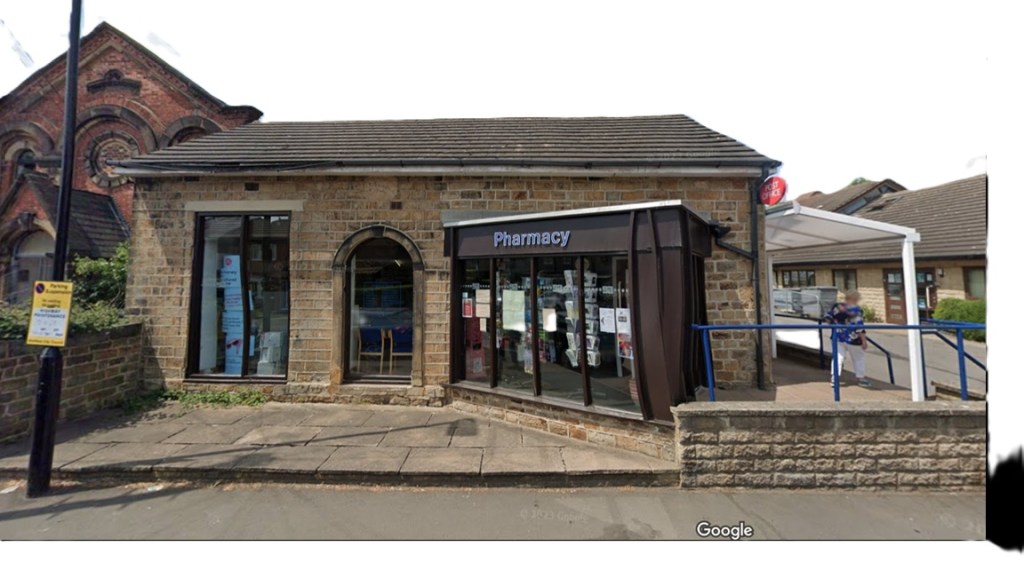
The former Primitive Methodist Chapel at 36/38 Queen Street, Mosborough, was built in 1830 by the local community on land purchased for £19 10s from Job Allen (1772-1853), publican and maltster of the White Hart Inn, Eckington. Allen had acquired the land from the Crown Estate in 1828 when the Manor of Eckington was released for sale upon the open market.

The Primitive Methodist movement was founded in 1811 by Hugh Bourne and William Clowes in Staffordshire. They emphasized evangelism, outreach to the working class, and open-air preaching and quickly gained popularity among rural and industrial communities, such as Mosborough. The chapel was built before any of the present chapels in the Sheffield Circuit with the aid of a mortgage of £100 from Sheffield solicitor and land surveyor John Haywood of 19 Paradise Square, Sheffield.

The modest, stone-faced building is simple and functional, distinguished by the keystone arch over the entrance, which reflects the movement’s emphasis on humility and accessibility. The accommodation rapidly became too small for its congregation and school, leading to efforts to raise funds for expansion. With the help of Sheffield cutlers, Messrs. Gilbert and Jones, the local community raised funds in 1868 to pay off the outstanding debt of £70 preparatory to building a new chapel alongside the existing one. Shortly afterwards, the Old Chapel was converted for use as two cottages.

Presently occupied by the community pharmacy of Gilbert and Armstrong, with a Post Office attached, several former tenants have been recorded at various times.

  • Farewell Woodhead (1877-1948) was a boot and shoe repairer. He was first recorded at 36 Queen Street in the 1912 Edition of Kelly’s Directory of the West Riding of Yorkshire and continued to occupy the premises until his retirement around 1942.
  • At this time (1941), the neighbouring property at No. 38 was tenanted by the British Legion (Mosborough) Branch.
  • Kelly’s Directory of 1924 records that No. 38 Queen Street was occupied by Charles Gee (1872-19480), a former miner who became incapacitated, operating a hardware store.
  • Thomas Henry Bolsover (1872-1949) ran a Fruit and Greengrocery store at No. 38 Queen Street around 1919.
  • The premises are also said to have been occupied by the Eckington Leader, a local newspaper publisher and by the Eckington Co-operative Society.

Following a period of disuse, the building was taken over by building contractors Sloane and Roebuck, who used it as offices with a builders’ yard to the rear. Eventually, the pharmacists Gilbert and Armstrong had it refurbished in 1996 in advance of the transfer of their business from Mosborough High Street.

Mosborough Methodist Church, Chapel Street (built 1888)

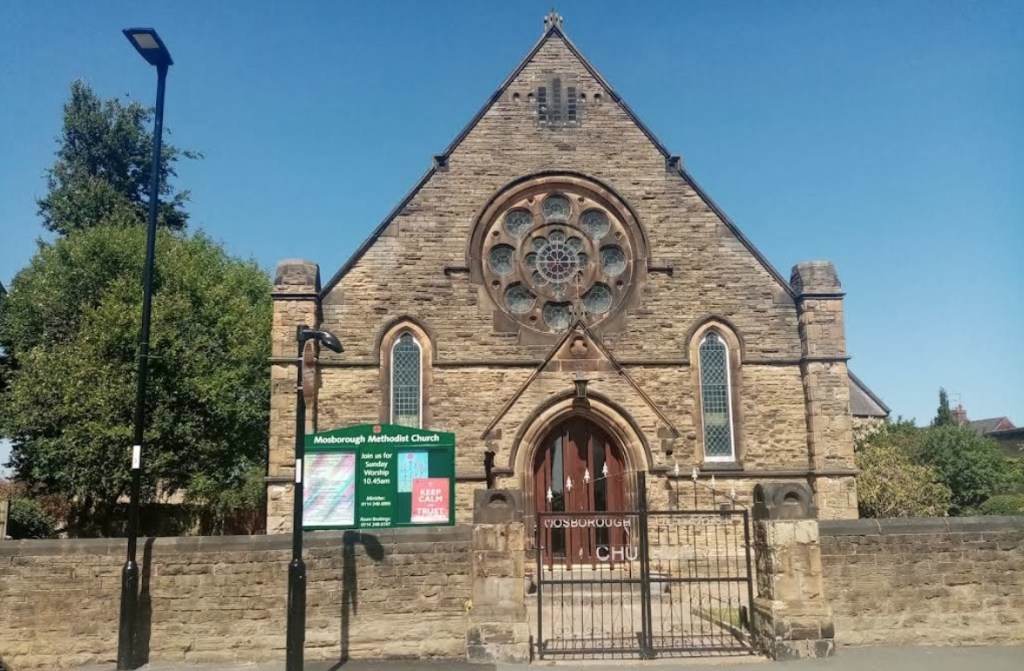
Mosborough Methodist Church on Chapel Street is the village’s late-Victorian Wesleyan chapel—solidly built in local stone, modest in scale, and still busy with worship and community life today. Its story sits alongside Mosborough’s other nonconformist landmarks, especially the Primitive Methodist chapel on Queen Street, and helps explain how Methodism shaped village life from the 19th century into the present.

Wesleyan Methodists were active locally by the 19th century; in 1888 the congregation raised a new chapel on Chapel Street (later commonly called “Trinity”). Surviving records and centenary material confirm the 1888 date and continuous activity through the 20th century. Leaders’ Meeting minute books survive from 1891 to 1968, and a centenary booklet—Mosborough Methodist Church: a hundred years, 1888–1988—was produced in 1989.

Around 1900 the church expanded its footprint with a substantial two-storey Sunday School/Church Hall just round the corner on Cadman Street. The hall’s materials and detailing were chosen to match the chapel, giving the site a coherent “campus” feel.

Stand at the gates on Chapel Street and the façade tells you almost everything about late-Victorian Wesleyan taste:

  • A simple gable-front composition in coursed local sandstone, with a centred arched doorway and flanking lancet windows.
  • Above the door, a prominent wheel (rose) window—a favourite Nonconformist motif of the 1880s–90s—signals the main worship space within.
  • The side elevation continues the theme with tall lancets and shallow buttressing; the whole is sturdy rather than showy, built for durability and good acoustics.

When the various Methodist streams united nationally in 1932, the Wesleyan chapel on Chapel Street became Mosborough Methodist Church within what is now the Sheffield Circuit—the arrangement you’ll still find today.

The “Never Fear” Dam and Wheel, Mosborough

Former water powered grinding wheel and water management system

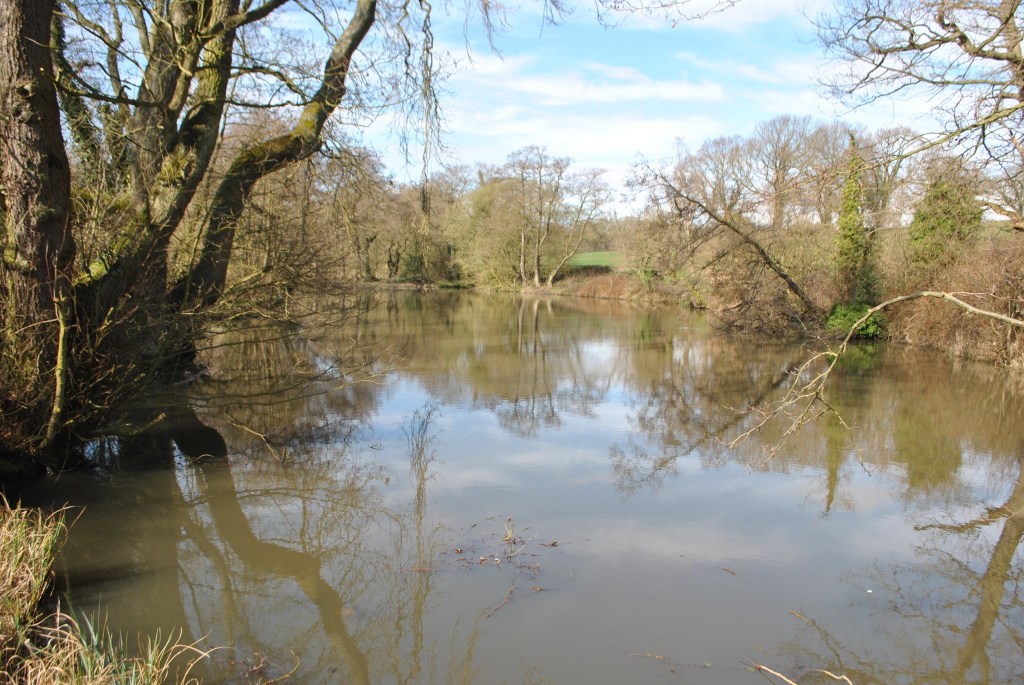
The “Never Fear” dam and former wheel are located on the River Moss, a tributary of the River Rother in Mosborough. Thought to be one of the earliest of several water powered grinding wheels in this district, it was erected around 1709 upon land that was once part of the subsidiary manor of Plumley and Westwell in Eckington, formerly within the county of Derbyshire. ‘Never Fear” dam is located near the hamlet of Ford in the Moss Valley. It is a historic site linked to the valley’s industrial past of water powered edge tool manufacture. In order to power the Never Fear Wheel, water was taken off the River Moss to feed a pond on the north side of the stream. The pond, which still exists (Figure 1) fed by the head goit, had a single building at its south-eastern end where earthworks probably indicate the site of the building.

Local legend has it that Never Fear Dam was so named since at least 1795 when a group of sickle makers from the nearby village of Ridgeway were walking home through some woods beside the dam one night when they saw a ghost coming towards them. They were horrified but the ghost, which on passing them, spoke to the men, saying “Never Fear” as it disappeared into the darkness.

It is believed that the last firm to use the wheel was John Haslam and Sons, sickle manufacturers, who continued in business for some time after 1900.  A display case of sickles and hooks made by John Haslam (1806-1897) for an exhibition in London in 1854 was on display at the Kelham Island Museum in Sheffield in 1984.

The weir of the dam was washed away one night in the 1920’s, ending the life of the wheel.

Figure 1: “Never Fear” Pond

“The Merchant’s Daughter of Mosborough Hall”

—a 17th-century fictional romance in verse

When Cromwell rode through war-torn lands,
and kings were weighed by common hands,
In Mosborough, where shadows fall,
Stood proud and still the old stone Hall.
The year was sixteen fifty-three,
The realm in flux, yet you loved me.
A scythesmith’s son, my hands were scarred,
But your heart saw past iron hard.
Your father, lord of moss and field,
With banners gold and manor seal’d,
Had sworn no child of forge or flame
Would ever speak his daughter’s name.
But you, in silks of midnight thread,
Would steal away when stars had spread,
To meet beneath the moon’s pale eye
Where Moss Brook ran so soft, so shy.
The smithy glowed with copper light,
As sparks would dance into the night.
You watched me work with quiet pride—
Though duty pulled, you would not hide.
At Mosborough Hall, the tapestries
Hung heavy with old fealties.
Yet in the stillness of your room,
You dreamed not of a lord’s perfume—
But soot and sweat, a hammer’s ring,
And love that dared defy a king.
You wore no crown, nor I a sword,
But oaths were made without a word.
We’d walk through Plumley’s secret wood,
Where none but us and blackbirds stood.
You kissed me there, your fingers laced,
And time itself forgot to race.
The war would end, the peace would pale,
But still you came, despite travail.
Though history turns and power shifts,
It cannot touch where true love lifts.
And now, though centuries have flown,
And moss has thickened over stone,
I feel you still in morning air,
Your voice a hush, forever there.

Bridle Stile: Mosborough’s ‘High Road’ to London

It may not be easy to comprehend nowadays that the Bridle Stile was once part of the principal route from Sheffield to London. There was an alternative, through Coal Aston to Marsh Lane and thence to Eckington, but the gradients on that route were considered far more arduous.
The Bridle Stile route led from Little Sheffield (perhaps better known today as Highfields) through Heeley and Gleadless to Mosborough, Eckington, and beyond. Notes from the records of the Wortley family of Wharncliffe Lodge in Sheffield, between 1731-1756, describe one such journey ‘From the Lodge to Eckington 12 miles thus: To Jessop’s [Broom Hall] 6 miles, from Mr. Jessop’s to Little Sheffield 1, Hely [Heeley] 1, Gladeley [Gleadless] 1, Marsburgh [Mosborough] 2, Eckington 1’. The 2 miles from Gleadless to Mosborough would have included the Bridle Stile. The mode of transport would have been horseback; carriages were not widely adopted until much later.
The name Bridle Stile is derived from the Middle English ‘bridel’, meaning headgear of a horse, relating to the verb ‘bregdan’, which means to move quickly, and the Old English ‘stig’, meaning path (language in everyday use before 900 AD). The route along the Ridgeway probably follows an earlier way stretching back to the prehistoric period.
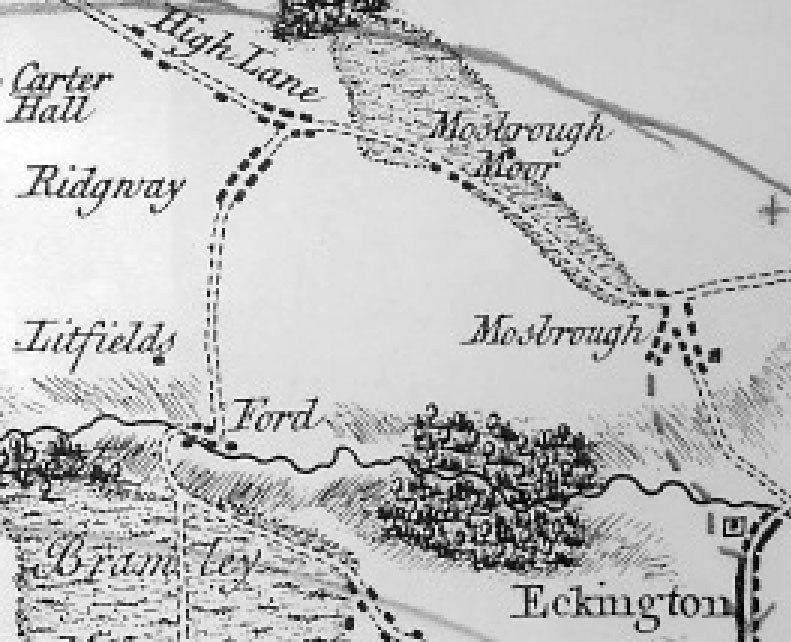
Burdett’s Map of Derbyshire (1791), one of the earliest complete maps of the county (see extract in Figure 1), depicts the route of the Bridle Stile from High Lane to Mosborough village, notably before the A6135 High Street/Mosborough Moor Turnpike Road was constructed. Records of the Eckington Manor Court in 1823 distinguish between the two routes, The Turnpike Road to the north and the ‘High Road’ (Bridle Stile) to the south.

Eckington Hall, Mosborough

Mosborough’s Eckington Hall was probably completed in the autumn of 1871. We know this because of an advertisement in a local newspaper by Joseph Appleyard of Conisbrough, “makers of fine Hall, Dining Room, Drawing Room and Bedroom Suites for the new residence of Mr Joseph Wells at Eckington Hall”.
Joseph Wells (1816-1873), the son of George Wells (1773-1844), coal master and farmer of Eckington and his wife Jane (formerly Hazlehurst, 1789-1850), was born at Eckington on 3rd October 1816. Local historian George Foster gives an account of Joseph Wells in his “Reminiscences of Mosborough During the Present Century”, published in 1886.
According to Foster, “He looked in vain for a suitable place in Eckington, so he chose a beautiful site in Mosbro’, and there built it. Thus we have got Eckington Hall at Mosbro’ whether we like the name or not. He lived but a very short time at his new Hall, dying very suddenly on 6th October 1873.” His widow, Mary, occupied the Hall until her death on 15th November 1916.
Their eldest son, Joseph Habershon Wells J.P. (1860-1925), inherited the Hall from his mother and lived there with his younger brother, John Matthew Habershon Wells (1869-1921), a housekeeper, cook, and two housemaids until he died in 1925. He wrote his will on a half sheet of notepaper, leaving the Hall to Sophia Jane Wells (1856-1935), the wife of Joseph’s brother William Edward Wells, who took over the ownership of Eckington Hall on Joseph’s death. She lived at Elmwood Hall, a neighbouring property built by her husband until she died in 1935. Meanwhile, Eckington Hall was leased to a succession of tenants, including a Miss Stooke who lived in all or part of the Hall between 1914 and 1934.
Sophia Jane Wells’ executors released the Hall for sale by auction in 1935, and it was purchased by Eckington solicitor and County Councillor Albert Edward Hall (1865 – 1951). He lived there relatively briefly until 1939 when he passed it on to his daughter Marjorie and her husband James Greaves Mudford, a rope and cover manufacturer with premises in Sheffield.
The Hall was acquired around 1992 by Trans-Pennine Breweries, which converted the building into an entertainment venue, hosting weddings, conferences, and medieval banquets in the Chatsworth Restaurant and The Shambles bar. It is now a private residence.

Tony’s Fish and Chips, 23 Chapel Street, Mosborough

Fig. 1 – Tony’s Fish and Chips, 23 Chapel Street, Mosborough

Tony’s Fish and Chip Shop, located at 23 Chapel Street in Mosborough (Fig. 1), is recognized as one of the oldest chip shops in Sheffield. In January 2025, the establishment was placed on the market by its owners, Robert and Helena Hatt. Robert commenced his employment at the shop 45 years prior, having been hired by his brother-in-law, Tony Buxton, after whom the shop is named. He acquired ownership of the shop in September 2002.

The building itself exhibits significant historical characteristics, as evidenced by the stone coping and kneelers situated over the gable wall. It likely served originally as a small barn, stable, or coach house for the adjacent property at 21 Chapel Street, with origins that probably trace back to the early nineteenth century.

The shop was first referenced in a newspaper article in February 1913, in which a local figure named Fab Ashley was reported to have been found intoxicated at Frank Thorley’s fish and chip shop. Francis “Frank” Thorley (1846-1932), a native of Trowell in Nottinghamshire, relocated to Mosborough in 1879 with his wife, Elizabeth, and their four children. At that time, he worked as a night deputy at Messrs J. & G. Wells Holbrook Colliery while also managing a small grocery store on Back Street in Mosborough. It appears that he assumed the tenancy of 23 Chapel Street after it had been occupied by Fred Drabble, a building contractor, who had held it along with 24 Chapel Street—the opposite house—since 1901. The Census of 1911 identified Frank as a fish dealer operating at 23 Chapel Street.

After the death of his wife, Elizabeth, in 1915, Frank transferred the business to his daughter and son-in-law, Elizabeth and Arthur Smith, before moving to Cossall in Nottinghamshire. The Smiths maintained operations at 23 Chapel Street until Arthur died in 1936.

Identifying subsequent owners of the establishment has proven challenging until the 1960s, when it was occupied by Ada Buxton, the mother of Tony Buxton, who is fondly remembered by local residents.